 |
 |
|
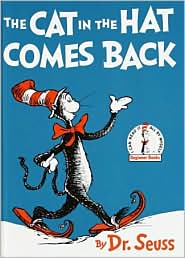
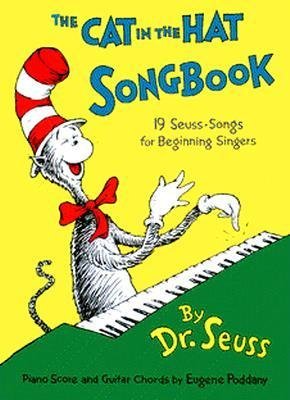
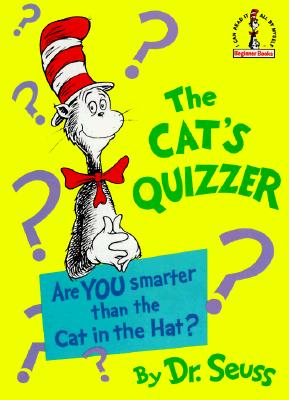
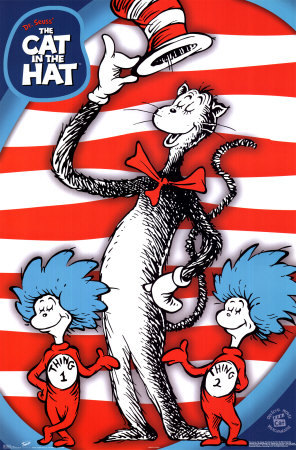
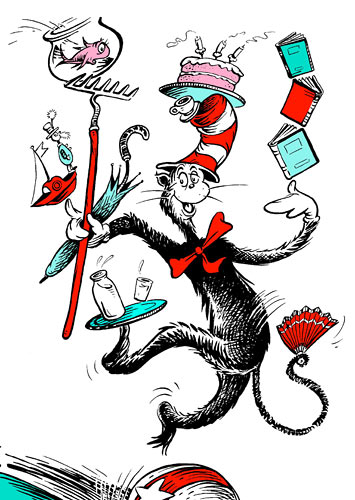
The Cat in the Hat Phenomenon! 1954 was a difficult time for the Geisel family. Helen developed Guillain-Barre syndrome, a nervous system disorder that involves weakness in the face, arms, legs, and breathing muscles. Helen was virtually paralyzed. She could not walk, speak, or swallow. Over the next year, Helen slowly began to improve. The stiffness in her legs and feet would continue for the rest of her life (Ford, 2003). The next year, when Helen was well enough, she and Ted visited Dartmouth College where he was awarded an honorary doctorate degree. The “Dr.” in his name was finally legitimate. He was rewarded with the doctorate because of his dedication and effort to make books enjoyable for both adults and children (Ford, 2003). John Hersey, an author from Life magazine, wrote an article suggesting that children would be more interested in reading if it were a more entertaining process. He also suggested that illustrations should be included from imaginative geniuses like Walt Disney and Dr. Seuss. This article was widely read. William Spaulding, the director of the education divisions at Houghton Mifflin, was one of these readers (Ford, 2003). Spaulding got in contact with Geisel to see if he would be interested in writing children’s books for beginning readers. He accepted the challenge. The company came to be known as Beginner Books. Spaulding wanted the first book to use no more than two hundred twenty-five words (Pease, 2010). He was given three select lists of words and asked to use them. The first list included words young readers should be able to recognize. The second list included words children may not have worked with before, but could easily sound out. The third list involved words children would have never worked with but could most likely understand (Ford, 2003). He started with the rhyming words “cat” and “hat”. The infamous Cat and the Hat took over a year to complete. This story is about a sister and brother who are having to stay in their house on a rainy day. A mischievous cat and his two helpers, Thing 1 and Thing 2, make a complete mess of the house but in the end help clean up with a magic machine (Ford, 2003). “The Cat is a con artist, a trickster, a character of possibility, aggressively adaptable to the occasion” (Nell, 2004). This book has won over millions, but there were a few skeptics. Some believed the cat’s strong use of authority was a bad message as well as the overwhelming sense of fantasy in the book. During this time, some people believed that reality was more important than fantasy. Regardless of the few critics, Cat in the Hat sold nearly a million copies in the first three years of publishing. It was published in English, Chinese, French, Swedish, and Braille (Ford, 2003). Dr. Seuss said, “I feel my greatest accomplishment was getting rid of Dick and Jane and encouraging students to approach reading as a pleasure, not a chore” (Corwin & Gorman, 1991). Since the cat was so important to Geisel, he wrote four more books about him. These books included The Cat in the Hat Comes Back, The Cat in the Hat Songbook, The Cat’s Quizzer, and I Can Read with My Eyes Shut. The Cat in the hat was so important to Ted that he kept a massive canvas of him grinning on his studio wall (Ford, 2003).
Website by Jordan Miller |
||